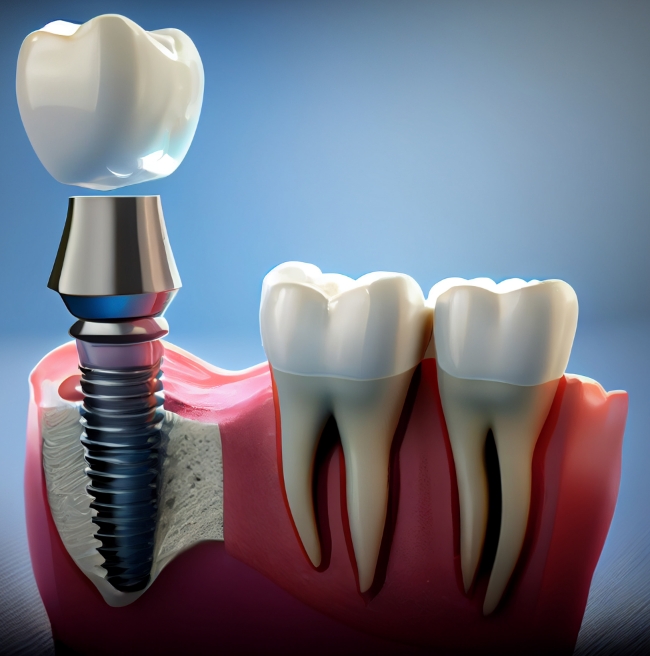
mankind’s almost perfect attempt to replace natural teeth
Dental Implant Treatment in Mumbai
We at Dr. Teeth believe every smile should be complete, confident, and long-lasting. Dental implants are the best way to replace missing teeth because they look and feel like natural teeth. They are strong, comfortable, and beautiful. We take pride in being one of the most trusted names for the best dental implants in Mumbai. We offer treatments that are accurate and comfortable for each patient.
Our specialists make sure that every implant looks and feels natural by using high-quality materials, advanced 3D digital imaging and skilled craftsmanship. Our team is led by the best implant dentist in Mumbai who ensure that your journey is smooth and worry-free whether you are missing one tooth or several. With our gentle, tech-driven method you can get dental implants that will last a lifetime.
What are Dental Implant?
Dental implant are artificial tooth roots surgically placed into the jawbone to support replacement teeth or dental prosthetics. They are a stable foundation for dental restorations, such as crowns, bridges, or dentures. Dental implant treatments are typically made of biocompatible materials like titanium, allowing them to fuse with the surrounding bone through osseointegration.
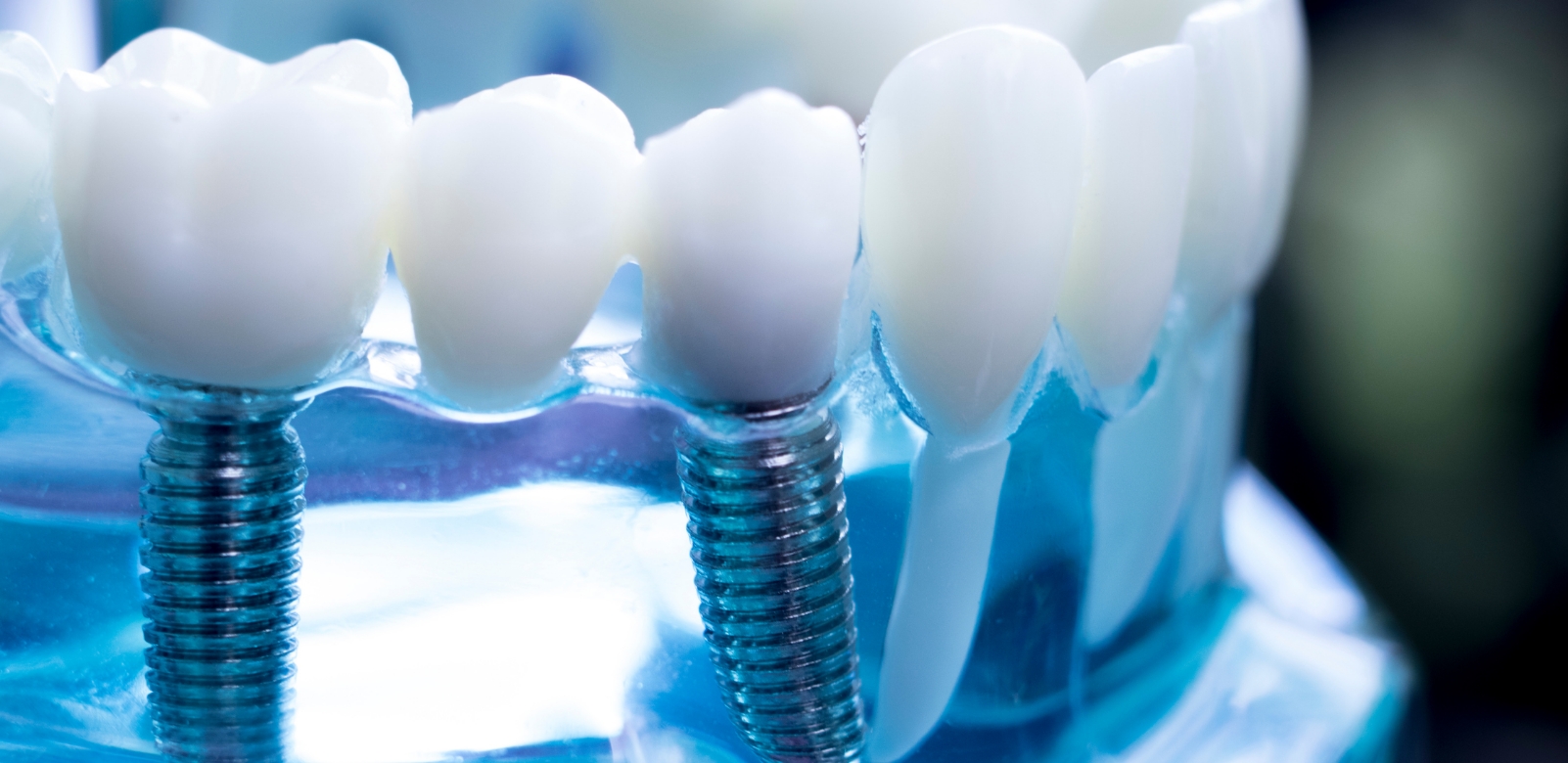
What Is the Procedure to Get a Dental Implant?
From start to finish, we make your implant journey comfortable and reassuring. At every step we prioritize safety, accuracy, and your comfort.
- Initial Consultation and AssessmentWe begin by using 3D scans to look closely at your teeth, gums, and jawbone. This helps us build a treatment plan that is perfect for you and will get you the best results.
- Treatment PlanningWe discuss all the implant options available to you and explain the process clearly after checking your oral health. You’ll know exactly what to expect because our team will answer all of your questions before moving forward.
- Tooth Extraction (if needed)If any damaged or decayed tooth remains, it’s carefully removed under local anesthesia for a completely pain-free experience. We ensure your gums heal properly before moving to the next step.
- Implant PlacementThe titanium implant is placed exactly in your jawbone, where it acts as a new root for the tooth. Our modern tools and gentle approach ensure that the placement is correct and there is minimal discomfort.
- Healing and OsseointegrationOver the next few months, your bone will naturally bond with the implant, making a strong, stable base. We closely monitor your healing progress to ensure everything goes smoothly.
- Abutment and Crown PlacementAn abutment is attached to the implant to support the crown once it has fully fused. Lastly, we put on a crown that is designed to match the color, shape, and function of your natural teeth.
Types of Dental Implant
There are several types of dental implant treatments, and the choice of implant depends on factors such as the patient’s oral health, the location of the missing teeth, and the specific dental restoration needed. Here are some common types of dental implant:
Dental Implant Treatment
Dental Implant Treatment
Dental Implant Treatment
Dental Implant Treatment
Dental Implant Treatment
Dental Implant Procedure
Dental implants work by providing a stable and permanent foundation for artificial teeth. The process involves several steps:
- Initial Consultation and Evaluation: A comprehensive dentist or oral surgeon examination is the first step. This involves assessing the patient’s oral health, reviewing medical history, and obtaining imaging, such as X-rays or CT scans, to determine bone density and structure.
- Treatment Planning: A personalised treatment plan is developed based on the evaluation. This plan includes considerations such as the number of implants needed, the type of restoration (crown, bridge, denture), and the patient’s overall oral health.
- Surgical Placement of the Implant: The dental implant surgery is typically performed under local anaesthesia. During the procedure, a small incision is made in the gum tissue to expose the jawbone. A hole is drilled into the bone, and the implant, usually titanium, is carefully placed into the prepared site. The gum is stitched back into place, and a protective cover may be placed over the implant during the initial healing period.
- Osseointegration: The osseointegration process occurs over the next few weeks to months. This is the biological bonding of the implant with the surrounding jawbone. The bone tissue grows and fuses with the implant’s surface, providing a stable anchor.
- Abutment Placement: Once osseointegration is complete, a second minor surgical procedure may be necessary to expose the implant and attach an abutment. The abutment is a connector that protrudes above the gum line and serves as the support structure for the artificial tooth.
- Impressions and Prosthesis Fabrication: After the abutment is in place, impressions are taken to create a custom-made prosthesis (crown, bridge, or denture). The prosthesis is designed to match the patient’s natural teeth in colour, shape, and size.
- Prosthesis Placement: The final step involves attaching the prosthetic tooth or teeth to the abutment. The dentist ensures the fit is secure and the patient’s bite is comfortable.
Once the entire process is complete, the patient has a stable and natural-looking tooth replacement that functions similarly to natural teeth. Proper oral hygiene and regular dental check-ups are essential to maintain the health and longevity of dental implants.
Reasons You Need Dental Implant
Dental implants may be recommended for various reasons when individuals have missing teeth or face tooth loss. Here are some common reasons why someone might need dental implants:
- Tooth Loss: The most straightforward reason for needing dental implants is the loss of one or more natural teeth due to factors such as decay, trauma, gum disease, or congenital conditions.
- Improved Aesthetics: Dental implants provide a natural and aesthetically pleasing solution for replacing missing teeth. They look and feel like natural teeth, enhancing the smile’s overall appearance.
- Preservation of Jawbone Density: When a tooth is lost, the jawbone in that area may start to deteriorate over time due to lack of stimulation. Dental implants act as artificial tooth roots and promote bone growth through osseointegration, helping preserve the jawbone’s density and structure.
- Enhanced Functionality: Dental implants restore the ability to bite, chew, and speak effectively. Unlike removable dentures, implants provide stability and prevent slippage, allowing for improved functionality.
- Prevention of Shifting Teeth: When a tooth is missing, neighbouring teeth may shift or drift into the space, leading to misalignment. Dental implants fill the gap, preventing adjacent teeth from moving and maintaining proper alignment.
- Support for Dental Prosthetics: Dental implants serve as a stable foundation for various dental prosthetics, including crowns, bridges, and dentures. They offer reliable support, reducing the risk of slipping or dislodging prosthetic devices.
- Long-Term Solution: Dental implants are a durable and long-lasting solution for tooth replacement. Proper care and maintenance can last for many years, making them a cost-effective and reliable option.
- Restoration of Confidence and Self-Esteem: Missing teeth can impact an individual’s confidence and self-esteem. Dental implants provide a fixed and natural-looking solution, helping to restore confidence in one’s appearance and the ability to smile without hesitation.
- Prevention of Facial Collapse: When multiple teeth are missing, the facial structure may collapse over time, giving a sunken appearance. Dental implants help maintain the face’s natural contours by preserving the underlying bone structure.
- Convenience and Comfort: Dental implants eliminate the inconvenience associated with removable dentures, such as the need for adhesives and concerns about slippage. They are comfortable, permanent, and become a natural part of the oral anatomy.
It’s important to consult with a dentist or oral surgeon to determine the most appropriate solution for individual cases, as dental implant candidacy depends on factors such as overall health, bone density, and oral hygiene.
Benefits of Dental Implant
Dental implants offer numerous benefits for individuals with missing teeth or those facing tooth loss. Here are some key advantages of dental implants:
- Natural Appearance: Dental Implants closely resemble natural teeth in appearance and feel. They are custom-designed to match the surrounding teeth’ colour, shape, and size, providing a seamless and natural look.
- Improved Speech: Dental Implants provide a stable and secure foundation, unlike removable dentures, which may slip and cause speech difficulties. This stability enhances speech clarity and confidence in communication.
- Enhanced Chewing Functionality: Dental Implant treatments restore the ability to bite and chew effectively. With their strong and stable anchoring in the jawbone, implants allow individuals to enjoy a wide range of foods without the restrictions often associated with removable dentures.
- Preservation of Jawbone Density: Dental Implants stimulate bone growth through osseointegration, helping maintain the jawbone’s density and structure. This prevents the bone loss that commonly occurs when natural teeth are missing.
- Long-Term Durability: Dental Implants are a durable and long-lasting solution. With proper care and regular dental check-ups, implants can last many years, providing a cost-effective option in the long run.
- Improved Oral Health: Dental Implants do not require the alteration of adjacent teeth, as is often the case with traditional bridges. This helps preserve the natural tooth structure and improves oral health.
- Comfort and Convenience: Dental Implants become a permanent part of the oral anatomy, eliminating the discomfort and inconvenience associated with removable dentures. There is no need for adhesives or worry about slippage.
- Prevention of Shifting Teeth: Dental Implants prevent adjacent teeth from shifting or drifting into the space by filling the gap left by missing teeth. This helps maintain proper dental alignment.
The benefits of dental implants can vary based on individual cases, and consultation with a dentist or oral surgeon is essential to determine the most suitable treatment plan.
More Benefits of Dental Implant

Strengthens your jaw bone
Perform simple jaw exercises to strengthen the muscles.

Promotes healthy gums
Brush your teeth at least twice a day using fluoride toothpaste.

Restores your ability to chew and speak
Schedule a comprehensive dental check-up with a dentist.

Gives you the confidence to smile naturally again
If your teeth are discolored or stained, consider teeth whitening procedures.
Why Choose Dr.Teeth.co for Dental Implants
We’re dedicated to providing the very best Dental Implant
- Over 15 years of expertise in painless and gentle dentistry.
- Use of advanced laser systems and 3D digital imaging for precision.
- High-quality materials that ensure long-term durability and aesthetics.
- Skilled Cosmetic Dentists and implant specialists who have transformed 1,000+ smiles.
- Recognized as one of the most trusted dental clinics for Dental Implants in Mumbai.
- Transparent care with honesty, integrity, and compassion.
- Every treatment focuses on patient comfort and stress-free experience.
- 24×7 emergency helpline available for patient support and aftercare.
- Affordable cosmetic treatments and smile transformations for patients of all ages.
Frequently Asked Questions
Can you have a full mouth of dental implant?
Yes, a full mouth of dental implant is possible. Implant-supported full bridge or full denture can replace missing teeth. Dental implant will replace your lost natural teeth . Full-mouth dental implant are anchored to the jawbone with titanium, and the bone actually fuses to the implant through a process called Osseointegration, reducing the risk of bone loss.
Can existing dentures be implanted?
Yes switching from dentures to dental implant is possible and it improves not only your dental health but also your quality of life. Direct attachment can be installed on implant and existing dentures can be fitted on the implant.
How long do tooth implant last?
Tooth Implant last a life time but also depends on various factors, mainly how well you take care of your dental implant, like daily flossing and brushing, seeing a dentist every six months.
What are the negative effects of dental implant?
Yes! Getting your existing data in is easy. Simply export your existing customers to a .csv file and import them within a couple of clicks.
What are dental Implant Cost in Mumbai, India?
The dental implant cost in India can vary depending on several factors, including the number of implant needed, the type of implant used, the complexity of the case, the choice of dental prosthetics (crowns, bridges, or dentures), and the specific dental clinic or surgeon. The cost may include consultations, diagnostic tests, surgical procedures, and post-operative care.
The best way to determine the specific dental implant cost in Mumbai for your case is to consult a dental professional. They can assess your needs, provide a detailed treatment plan, and offer a more accurate dental implant cost estimate.
When considering dental implant costs, it’s essential to factor in the quality of materials used, the dental professional’s expertise, and the dental clinic’s overall reputation. Some clinics may provide package deals for multiple implant or offer financing options to make the treatment more affordable.