Most people find the term “root canal” to be intense. It often leads to the question of whether this is a “surgery” or just a regular check-up gone long. At Dr. Teeth, we see that patients come to our Mumbai clinic with fear and curiosity. Modern dentistry is controlled and quiet. We use advanced tools to make sure you are comfortable. This blog will define what a root canal actually means and try to clear up all your doubts and misconceptions.
What Is a Root Canal Treatment?
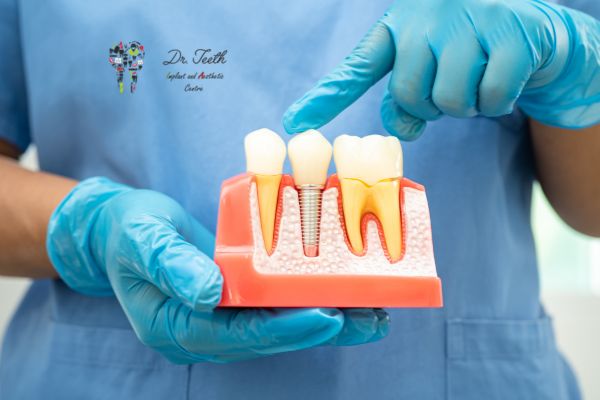
A root canal treatment is a restorative procedure used to save a tooth that is badly decayed or has become infected. Inside your tooth, beneath the white enamel and a hard layer called dentin, is a soft tissue. It is also known as the pulp. This pulp contains blood vessels, nerves, and connective tissue. It helps grow the root of your tooth during development. A fully grown tooth can survive without the pulp because the tooth continues to be nourished by the tissues surrounding it.
We perform this treatment when the pulp becomes inflamed or infected. This can happen because of deep decay, repeated dental procedures on the tooth, or a crack or chip in the tooth. Also, an injury to a tooth may cause pulp damage even if the tooth has no visible chips or cracks. If pulp inflammation or infection is left untreated, it can cause pain or lead to an abscess. The goal of the treatment is to remove the damaged area, clean it, and seal it. It is the ultimate way to keep your natural smile intact.
Is a Root Canal Considered Surgery?
A root canal is generally classified as a non-surgical dental procedure. In the world of medicine, there is a difference between a “procedure” and a “surgery.” Dental procedures like fillings, crowns, and root canals are endodontic treatments. They happen inside the tooth structure.
Surgery usually involves cutting into the soft tissue, like your gums, or removing bone. Most root canals do not require any incisions. We access the infected area through the top of the tooth. It is a straight path down into the canals. This makes it a conservative treatment. There are specific, rare times when a root canal might involve a surgical component, but for the vast majority of our patients at Dr. Teeth, it remains a non-surgical experience.
Why a Root Canal Is Not Typically Considered Surgery
We consider a root canal non-surgical because of how we access the problem. There are no external incisions made to your gums in a standard case. We work entirely within the existing structure of your tooth. The procedure is performed while you are relaxed in a standard dental chair.
We use local anaesthesia to numb the area. It is a minimally invasive process. We are simply cleaning out a hollow space that already exists inside your root. Because we are not cutting through skin or muscle, the body does not view it as a major surgical event. The recovery is much faster than a surgical extraction.
When Can a Root Canal Become Surgical?
There are moments when a standard approach is not enough. This happens if the infection spreads in an area we cannot reach through the tooth crown. We might perform an apicoectomy. This is a root-end surgery. In this case, we make a small opening in the gum tissue to reach the very tip of the root.
We might do this if a conventional root canal fails or if there is a persistent infection in the bone. Signs that you might need this include swelling that won’t go away or pain that returns months after a regular treatment. We use advanced digital imaging to see these hidden issues. This allows us to be precise. Even then, it is a minor surgery. It is still focused on saving the tooth rather than pulling it out.
What Happens During a Root Canal Procedure?
The root canal procedure is very straightforward. First, we numb the tooth and the surrounding area. You might feel a slight pinch, but then the area goes completely dull. We place a small protective sheet called a dental dam to keep the tooth clean and dry. Then, we make an opening in the top of the tooth.
We use very fine instruments to remove the pulp from the pulp chamber and root canals. We clean the space, shape it, and use a special solution to kill any remaining bacteria. Once the space is clean, we fill the canals with a biocompatible material. This is usually a rubber-like substance called gutta-percha. We seal the opening with temporary cement. The whole thing usually takes one or two visits. You will feel pressure, but you shouldn’t feel any sharp pain.
Is Root Canal Treatment Painful?
The idea that root canals hurt is a huge myth. In reality, the procedure is what gets rid of the pain. The throbbing ache of an infected nerve is much worse than the treatment itself. Most patients tell us that the experience feels similar to getting a deep filling.
If you compare a root canal to a tooth extraction, the root canal is often easier to recover from. Modern anaesthesia is very effective. We ensure the tooth is completely numb before we start. After the treatment, you might have some sensitivity for a day or two. This is normal. Your body is healing. You can usually manage this with over-the-counter medicine.
Recovery After a Root Canal
Recovery is quite fast. You can usually go back to work or school the next day. For the first few hours, your mouth will feel numb. Be careful not to bite your cheek or tongue. We suggest avoiding hard or crunchy foods until the final restoration is placed.
A temporary filling is often used at first. You will need to come back to Dr. Teeth for a permanent crown or a large filling. The tooth is more brittle after the pulp is removed. A crown protects it from breaking. If you skip this step, the tooth could crack. Proper oral care like brushing and flossing remains vital.
Benefits of Root Canal Treatment
The biggest benefit is that you save your natural tooth. No bridge or implant feels exactly like your own tooth. It also prevents the infection from spreading to your jaw or your blood. Keeping your tooth maintains your natural bite alignment. This stops other teeth from shifting out of place. It is also a cost-effective solution. While it might seem expensive upfront, it is more affordable than the long-term costs of replacing a lost tooth with an implant and a crown.
Why Choose Dr. Teeth for Root Canal Treatment
Our team at Dr. Teeth consists of experienced endodontic and dental specialists. We use advanced pain-free technology to make sure the process is smooth. Our diagnosis is accurate because we use modern imaging tools.
We take a personalised approach to every smile. Our facility in Mumbai is clean, safe, and modern. We have a high success rate because we pay attention to the smallest details. We even offer emergency dental care services 24/7. If you have a toothache in the middle of the night, we are here for you. We want quality dental care to be accessible to everyone, so we offer flexible payment plans along with affordable options.
Conclusion
A root canal is a restorative dental procedure, not a surgery. It is a common treatment that helps millions of people keep their teeth healthy. If you have a tooth that is hurting or sensitive to heat, you should get it checked. Delaying treatment only makes the infection worse. We want to help you maintain a healthy, confident smile.