
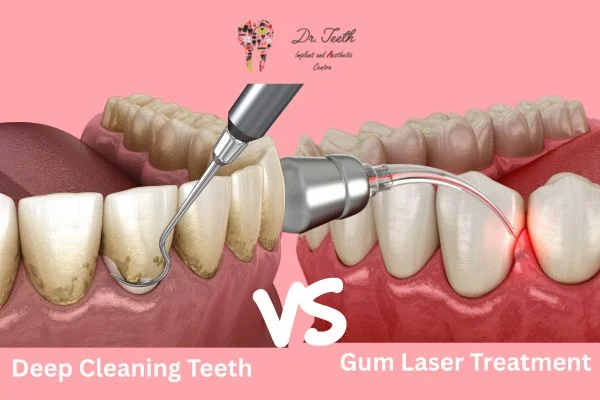
In our previous blog on What Is Laser Gum Treatment, we explained how advanced laser technology is used to treat gum problems with precision and minimal discomfort. Many patients, however, still ask one important question: How is laser gum treatment different from deep cleaning, and which option is better for gum disease? Understanding the difference between these two procedures can help you make an informed decision about your oral health.
What Is Deep Cleaning (Scaling and Root Planing)?
Deep cleaning, also known as scaling and root planing, is a non-surgical dental procedure used to treat early to moderate stages of gum disease. It focuses on removing plaque, tartar, and bacteria from below the gum line and smoothing the tooth roots to prevent bacteria from reattaching.
How Deep Cleaning Works
-
Scaling removes hardened plaque and tartar from tooth surfaces and beneath the gums
-
Root planing smoothens the roots of teeth
-
This helps gums reattach more firmly to the teeth
-
Reduces gum inflammation and bleeding
Deep cleaning is often done under local anesthesia and may require more than one sitting, depending on the severity of gum disease.
What Is Laser Gum Treatment?
Laser gum treatment is an advanced dental procedure that uses focused laser energy to remove infected gum tissue and bacteria from deep gum pockets. Unlike deep cleaning, lasers directly target diseased tissue while preserving healthy gums and stimulating natural healing.
Laser treatment is commonly recommended for moderate to advanced periodontitis or when traditional methods alone are not enough.
Key Differences Between Laser Gum Treatment and Deep Cleaning
1. Treatment Method
Deep cleaning uses manual and ultrasonic dental instruments to remove plaque and tartar. Laser gum treatment uses high-precision laser technology to eliminate infection and diseased tissue.
2. Level of Invasiveness
Deep cleaning is non-surgical but can cause some discomfort and bleeding. Laser gum treatment is minimally invasive and causes significantly less trauma to surrounding tissues.
3. Effectiveness for Advanced Gum Disease
Deep cleaning is effective for mild to moderate gum disease. Laser gum treatment is more effective in advanced cases where deep gum pockets and tissue infection are present.
4. Pain and Comfort
Patients may experience sensitivity after deep cleaning. Laser gum treatment is generally more comfortable, as lasers seal nerve endings and blood vessels during the procedure.
5. Healing and Recovery Time
Healing after deep cleaning may take several days. Laser gum treatment usually results in faster healing, with most patients resuming normal activities within 24–48 hours.
Laser Gum Treatment vs Deep Cleaning: A Quick Comparison
| Aspect | Deep Cleaning | Laser Gum Treatment |
|---|---|---|
| Type of Procedure | Non-surgical | Minimally invasive |
| Tools Used | Manual & ultrasonic instruments | Dental laser |
| Best For | Early to moderate gum disease | Moderate to advanced gum disease |
| Bleeding | Possible | Minimal |
| Recovery Time | Few days | Faster recovery |
| Comfort Level | Moderate discomfort | Minimal discomfort |
Which Treatment Is Better for Gum Disease?
There is no one-size-fits-all answer. The best treatment depends on:
-
The severity of gum disease
-
Depth of gum pockets
-
Overall oral health
-
Patient comfort and healing preference
In many cases, dentists combine deep cleaning with laser gum treatment to achieve optimal results. Deep cleaning removes hard deposits, while lasers eliminate bacteria and infected tissue at a deeper level.
Can Deep Cleaning Help Avoid Laser Gum Treatment?
When gum disease is detected early, deep cleaning alone can often control infection and prevent further damage. However, if gum disease progresses or does not respond adequately to deep cleaning, laser gum treatment may be recommended to avoid more invasive surgical procedures.
Laser Gum Treatment vs Deep Cleaning: Frequently Asked Questions
Is laser gum treatment a replacement for deep cleaning?
Not always. Deep cleaning is often the first line of treatment, while laser therapy is used for advanced cases or as a complementary procedure.
Is laser treatment more expensive than deep cleaning?
Laser treatment may cost more due to advanced technology, but it often reduces the need for surgery and long recovery times.
Which treatment has longer-lasting results?
Both treatments are effective when followed by good oral hygiene and regular dental check-ups.
Why a Proper Dental Evaluation Matters
Only a dental examination can determine whether deep cleaning or laser gum treatment is right for you. Dentists assess gum pocket depth, bone loss, inflammation, and overall oral health before recommending a treatment plan.
Conclusion
Both deep cleaning and laser gum treatment play vital roles in managing gum disease. Deep cleaning is ideal for early-stage gum problems, while laser gum treatment offers a more advanced, comfortable, and effective solution for severe cases. Understanding the difference helps patients take timely action and protect their long-term oral health. Consulting an experienced dental professional ensures the most suitable and effective treatment approach.