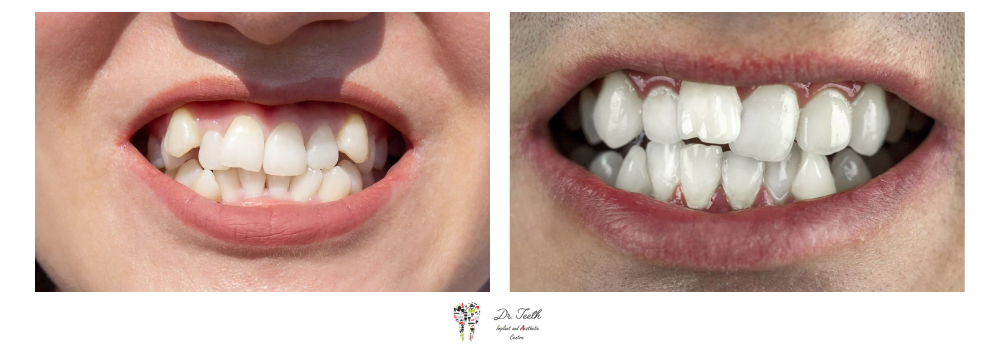
Teeth that are displaced and do not grow straight are called crooked teeth. They could seem crowded, tilted, or scattered. Children, teens, and adults are all impacted by this condition. Teeth that are uneven are more than just a cosmetic issue. They raise the possibility of discomfort, low self-esteem, and problems with oral health. Early dental alignment treatment contributes to maintaining good oral health and appearance.
What Are Crooked Teeth?
Crooked teeth are teeth that do not fit correctly in the mouth. They may overlap, twist, or grow too far apart. Bite problems like overbite, underbite and crossbite are also crooked teeth types. Uneven teeth change the way the mouth functions. They can make chewing difficult and affect speech. Crooked teeth types range from mild crowding to severe misalignment.
Age Factor and Crooked Teeth
Children’s crooked teeth often begin when baby teeth develop too soon or too late. Early identification of crooked teeth is crucial because it facilitates correction while the jaw is still growing. In teenagers, braces and aligners work well because the teeth are still flexible. Adult teeth misalignment may result from jaw growth, injury or dental neglect. Treating crooked teeth becomes more complex with age, but correction is still possible.
Common Causes of Crooked Teeth
The causes of crooked teeth are both natural and lifestyle related. Genetics is one of the main causing tooth misalignment. Children are more likely to have uneven teeth if their parents do. Teeth can often be pushed out of position by childhood behaviour like thumb sucking, tongue thrusting and prolonged dummy use. Gaps and uneven spacing are caused by early baby tooth loss or late adult tooth eruption. If the jaw is small or grows incorrectly, teeth can fight for space. Gum disease, untreated cavities and poor dental hygiene can also cause crooked teeth.
Risks and Problems Associated With Crooked Teeth
Problems with crooked teeth go beyond appearance. Because misaligned teeth is more difficult to clean, it is more vulnerable to gum disease, cavities and plaque. A bite imbalance that result in jaw pain and chewing difficulties is another risk associated with misaligned teeth. Speech problems like lisping are also associated with dental health risks. Having uneven teeth lowers self esteem which has an impact on social and personal life. Long term, untreated misalignment can worsen oral health and increase discomfort.
Impact on Overall Health
Crooked teeth health risks go beyond oral health. Teeth misalignment problems can cause jaw pain from crooked teeth, frequent headaches, or TMJ disorders. Improper chewing reduces the efficiency of digestion. Strain on jaw muscles often spreads to the neck and shoulders, creating more discomfort. Correct dental alignment supports better oral and overall health.
How Crooked Teeth Are Diagnosed
A dental checkup is the first step in diagnosing crooked teeth. Dentist look for symptoms of bite problems, crowding and spacing in the mouth. X rays and scans is used to study jaw position and tooth roots. A teeth alignment assessment helps in creating the right treatment plan. Regular dental examinations enable the early identification and treatment of misaligned teeth.
Best Treatment Options for Crooked Teeth
Braces
One of the best treatments for crooked teeth is braces. Conventional metal braces press on teeth with wires and brackets. Many patients prefer ceramic braces because they are less noticeable. Depending on the degree of misalignment dental braces treatment may require one to three years.
Clear Aligners
Clear aligners, also known as invisible braces, are a modern option. They are transparent trays designed to gradually shift teeth into place. These teeth aligners are removable, comfortable, and discreet. They work best for mild to moderate crooked teeth.
Retainers
Dental retainers are used after braces or aligners. They maintain the new teeth position and prevent shifting. Retainers are a key step in teeth alignment maintenance. Without them, teeth may return to their old position.
Cosmetic Dentistry Options
Cosmetic dental treatment helps when misalignment is mild. Teeth veneers or bonding improve the shape and look of teeth. These methods enhance appearance but do not solve bite problems. They are often chosen for faster cosmetic correction.
Surgery
Severe cases may need dental surgery for crooked teeth. Corrective jaw surgery aligns both the teeth and jaw for proper balance. Surgery is usually considered when orthodontic treatments alone are not enough.
Cost and Duration of Treatments
Crooked teeth treatment cost depends on the method. Braces cost is moderate but requires long-term commitment. Clear aligners cost more but offer comfort and better appearance. Veneers and bonding are faster but limited to cosmetic improvement. Corrective dental surgery is costly and suggested only for severe cases. Dental treatment duration may range from weeks for cosmetic fixes to years for orthodontic treatments.
Common Myths About Crooked Teeth
Crooked teeth myths often confuse people. Many think crooked teeth only affect looks, but they also harm dental health. Another myth is that braces are painful and only for kids, but adults also use them successfully. Some believe early treatment is not important, but teeth alignment facts show it is easier to correct misalignment in childhood.
Tips to Prevent Crooked Teeth
Prevent crooked teeth with healthy habits. Children should avoid thumb sucking and prolonged pacifier use. Good dental care tips include brushing twice a day, flossing, and regular cleaning. Oral hygiene tip practices ensure proper growth and alignment. Early dental check-ups detect problems on time. Mouthguards during sports protect teeth from injury.
When to See a Dentist
Crooked teeth dentist advice is to seek help when teeth appear crowded, uneven, or when bite problems occur. Pain while chewing, speech problems, or jaw discomfort are also warning signs. Teeth alignment consultation ensures that issues are detected and corrected early. A routine dental check-up is the best step to maintain healthy teeth and gums.
Crooked teeth treatment is important for oral health and confidence. Causes of crooked teeth include genetics, habits, and poor dental care. Misaligned teeth lead to health risks, pain, and reduced confidence. Teeth alignment solutions include braces, clear aligners, retainers, veneers, and corrective surgery. Crooked teeth treatment cost and dental treatment duration vary, but the benefits are long-lasting. Early treatment gives better results and prevents future dental problems. Correcting crooked teeth ensures better oral health and improved quality of life.